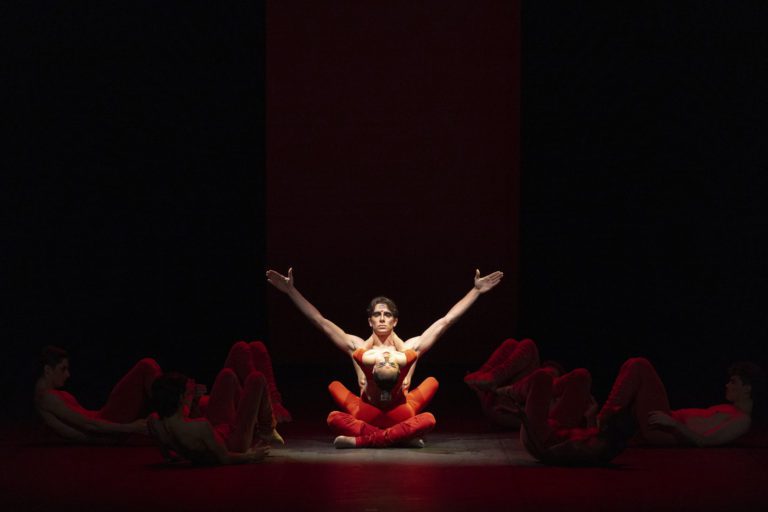
Dance Takes Centre Stage at the Verbier Festival
Following a memorable appearance in 2025, the Béjart Ballet Lausanne returns to the Verbier Festival with a generous programme rich in contrasts. From the tragic passion of Romeo and Juliet to the introspection of La Luna, from the spirituality of Bhakti III to the contrasting rhythms of Mozart Tangos, this evening celebrates the evocative power and choreographic inventiveness of Maurice Béjart, whose work brings music, movement and the great questions of human existence into dialogue.
Inspired by Hector Berlioz’s dramatic symphony Romeo and Juliet, a pas de deux from Maurice Béjart’s ballet Romeo and Juliet will open the evening. Béjart’s interpretation transcends Shakespeare’s narrative to reveal its very essence: love and hatred, passion and cruelty, caught in the whirlwind of a destiny that has become the stuff of legend. Rather than following the twists and turns of the play, the choreographer creates a sweeping tableau in which emotions echo and pursue one another through a veritable labyrinth of feeling.
Created in 1984 for Italian dancer Luciana Savignano, La Luna is one of Maurice Béjart’s most intimate solos. Set to the music of Bach, this emblematic piece reveals the full subtlety of his choreographic language. Through gestures of exquisite delicacy, movement seems to emerge from deep within the body before unfolding into space with an almost ethereal fluidity.
Inspired by Indian spirituality, Bhakti III reflects Maurice Béjart’s quest for dialogue between cultures and traditions. The term bhakti refers to a form of devotion, an impulse of the heart directed towards the divine. Through ritualised gestures and a dance imbued with fervour, the work transcends the boundaries of movement to explore the relationship between body, soul and the sacred.
The evening will conclude with Mozart Tangos. Maurice Béjart brings together two musical worlds that seem diametrically opposed: Mozart’s classical elegance and the rhythmic sensuality of the tango. From this encounter emerges a daring dance in which musical precision blends with the energy of the dancers’ bodies. With his boundless inventiveness and taste for unexpected juxtapositions, Béjart creates a work brimming with exuberance and delight.
*Beware of the grey ticketing market: Béjart Ballet Lausanne cannot be held responsible for any purchase of show tickets outside the official ticket offices mentioned on the website.